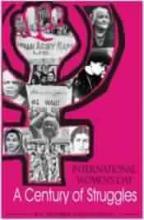
2010-2011 marks the Centenary Year of International Women’s Day. Every year on 8 March, we find Central and State Governments in India as well as Governments all over the world making pronouncements in favour of women. The market and media tend to project it as a day for men to buy women ‘gifts’ – reducing IWD to a meaningless and inane commercial event. Governments talk of women’s ‘empowerment’ – while all the time strengthening the social and economic structures that dis-empower women! In the newspapers and TV channels, and in the words of the heads of Governments, there is no hint of the actual history of International Women’s Day.
Was it the United Nations which began the tradition of IWD? Was it any government? Or was it ordinary, toiling women themselves who created history by choosing a day to mark their aspirations and demands for equality and freedom? When we celebrate a 100 years of IWD, what exactly are we commemorating and celebrating?
... ...
An AIPWA Publication
Design and Layout: Rajesh Ranjan
Published by: All India Progressive Women's Association (AIPWA)
U-90 Shakarpur, Delhi - 110092
Phone: 91-11-22521067 // Fax: 91-11-22442790
e-mail: aipwa@yahoo.co.in

Today, International Women’s Day is observed on 8 March in most countries of the world. Governments often choose this day to make various official pronouncements, and the United Nations too recognizes and celebrates this day. But how did International Women’s Day originate?
As we turn the pages of history, we find that women workers of the world made the history of Women’s Day themselves – under the banner of communist parties. Like May Day, IWD too began to commemorate the struggles of the working class.
International Women’s Day is an official holiday in 29 countries – mostly countries with a history of socialist revolution, including China, Cuba, Vietnam, states in the former Soviet Union and Eastern Europe. Some African countries also observe a holiday on 8 March.
Come, let us get a glimpse of those struggling women, whose legacy we inherit today!
On 8 March 1857, women garment and textile workers in New York City held a mass protest and in March two years later the same women won the right to unionize. Their struggle was against brutal working conditions, low wages, and a 12-hour working day.
On March 8, 1908, women workers under the banner of socialists organized a demonstration of 15,000 in New York, demanding pay raises, shorter hours, women’s right to vote, and an end to child labor.
In response to a call by the Socialist Party of America (a US communist group), the first National Woman’s Day (NWD) was observed across the United States on 28 February. The day was observed with huge demonstrations to demand labour laws (including the 8-hour working day) and the right to vote for women.
In 1909 women garment workers in the US staged a general strike. 20-30,000 shirtwaist makers struck work in the bitter winter cold for 13 weeks, demanding better pay and working conditions. The Women's Trade Union League provided bail money for arrested strikers and large sums for strike funds.
In 1910, at the Second International Conference of Working Women at Copenhagen, Clara Zetkin (a leader of the German Social Democratic Party – as the communist party was called in those days) proposed the idea of an International Women's Day, on the lines of the Women’s Day observed in 1909 in the US. She proposed that every year in every country there should be a celebration on the same day – a Women's Day – to press for rights for working women, including labour laws for women, the right to vote, and peace. The conference of over 100 women from 17 countries, representing unions, socialist and communist parties, working women’s clubs, and including the first three women elected to the Finnish parliament, agreed to Zetkin's suggestion and that is how International Women's Day came into being.
The date chosen for International Women’s Day was 19 March – to commemorate the day of the 1848 revolution in Prussia when a powerful people’s uprising forced the Prussian king to promise the right to vote for women – a promise that he betrayed later.
This is how Russian communist leader Alexandra Kollontai described the first International Women’s Day:
“The first International Women's Day took place in 1911. Its success succeeded all expectation. Germany and Austria on Working Women's Day was one seething, trembling sea of women. Meetings were organized everywhere – in the small towns and even in the villages halls were packed so full that they had to ask male workers to give up their places for the women.
This was certainly the first show of militancy by the working woman. Men stayed at home with their children for a change, and their wives, the captive housewives, went to meetings. During the largest street demonstrations, in which 30,000 were taking part, the police decided to remove the demonstrators' banners: the women workers made a stand. In the scuffle that followed, bloodshed was averted only with the help of the socialist deputies in Parliament.”
Following the decision agreed at Copenhagen in 1911, International Women's Day (IWD) was honoured the first time in Austria, Denmark, Germany and Switzerland on 19 March. More than one million women and men attended IWD rallies campaigning for women's rights to work, vote, to hold public office and end discrimination.
Plans for the first International Women's Day demonstration were spread by word of mouth and in the press. During the week before International Women's Day two journals appeared: ‘The Vote for Women’ in Germany and ‘Women's Day’ in Austria. Various articles were devoted to International Women's Day: 'Women and Parliament', 'The Working Women and Municipal Affairs', 'What Has the Housewife got to do with Politics?', etc. The articles thoroughly analyzed the question of the equality of women in the government and in society. All articles emphasized the same point that it was absolutely necessary to make parliament more democratic by extending the franchise to women.
Less than a week after that first IWD celebration, on 25 March, the terrible tragedy of the 'Triangle Fire' took place at a garment factory in New York City, which highlighted the miserable condition of working women. The fire at the Triangle Shirtwaist Factory claimed the lives of 146 workers, most of them women. Locked exits and poor safety measures were responsible for the deaths. This incident became an international scandal, and led to a new wave of labour protests. These protests led to the formation of the International Ladies Garment Workers Union, one of the first primarily female unions, which became one of the largest unions in the US.
On the eve of World War I campaigning for peace, Russian women observed their first International Women's Day. In 1913 following discussions, International Women's Day was transferred to 8 March – which has ever since been the global date for International Women's Day. On 8 March 1914, women across Europe held rallies to campaign against the war.
This is how Alexandra Kollontai described IWD actions in Russia of 1913-1914:
“The Russia working woman first took part in “Working Women's Day” in 1913. This was a time of reaction when Tsarism held the workers and peasants in its vice-like grip. There could be no thought of celebrating “Working Women's Day” by open demonstrations. But the organized working women were able to mark their international day. Both the legal newspapers of the working class – the Bolshevik Pravda and the Menshevik Looch – carried articles about the International Women's Day: they carried special articles, portraits of some of those taking part in the working women's movement and greetings from comrades such as Bebel and Zetkin.
In those bleak years meetings were forbidden. But in Petrograd, at the Kalashaikovsky Exchange, those women workers who belonged to the Party organized a public forum on “The Woman Question.” This was an illegal meeting but the hall was absolutely packed. Members of the Party spoke. But this animated “closed” meeting had hardly finished when the police, alarmed at such proceedings, intervened and arrested many of the speakers.
In 1914, “Women Workers Day” in Russia was better organized. Both the workers' newspapers concerned themselves with the celebration. Our comrades put a lot of effort into the preparation of “Women Workers Day.” Because of police intervention, they didn't manage to organize a demonstration. Those involved in the planning of “Women Workers Day” found themselves in the Tsarist prisons, and many were later sent to the cold north. For the slogan “for the working women's vote” had naturally become in Russia an open call for the overthrow of Tsarist autocracy.”
On 8 March 1917 (23 February according to the old calendar then followed in Russia), Russian women began a strike for “Bread and Peace”, protesting against the war that had claimed the death over 2 million Russian soldiers and against severe food shortage. Women textile workers in Petersburg began the strike, and called on other factories to support them. Four days of the strike forced the Tsar to abdicate. The Russian monarchy was overthrown and the provisional Government then formed granted women the right to vote.
Women’s Day has been a day of protest and resistance down the years all over the world.
On IWD in 1979, in the midst of the revolution that ousted the US-backed Shah, and just after the right-wing Islamic regime of Ayatollah Khomeini came to power, 100,000 women and male supporters rallied at Tehran University. From early hours of the morning meetings were held in girl's high schools and in Tehran University. In protest against Khomeini’s decree making the veil compulsory for women in Iran, hundreds of thousands of women marched through Teheran on 8 March. These included women wearing western clothes as well as some wearing the veil – but all protesting against the compulsory imposition of the veil. Protests were organized in other cities, too. Women demanded equal rights, including the right to dress as they wished. Some of the slogans of the demonstrators were: 'Freedom is in our culture; to stay at home is our shame' 'Liberty and equality are our undeniable rights' ' We will fight against compulsory veil; down with dictatorship'. 'In the dawn of freedom, we already lack freedom' 'Women's Day of Emancipation is neither Western, nor Eastern, it is international'. In several incidents women demonstrators were physically attacked on the streets. Revolutionary Guards fired in the air to disperse women demonstrators, estimated by the press at 15,000, from the streets around the Prime Minister's office. The protests continued for several days, defying the religious fundamentalists who attacked the women protestors.
Even in the historical records that survive from several centuries ago in India, we can find evidence of women’s aspiration and assertion for equality and rights. In the ‘Therigatha’ songs composed by the Buddhist nuns of 6th century BC, we hear Sumangalamata seeking to be free “from kitchen drudgery/Free from the harsh grip of hunger,/And from empty cooking pots,/Free too from that unscrupulous man,/The weaver of sunshades”; and Mutta similarly aspiring for freedom “From mortar, pestle and my twisted lord.”
In India’s first war of Independence against British colonialism in 1857, it was not only queens like Rani Lakshmibai and Begum Hazrat Mahal who emerged as fighters and leaders. Dalit women like Jhalkari Bai and courtesans like Azizan Bai were among the women who flung themselves into the struggle for freedom. In the process all those fighters from diverse backgrounds also challenged many of the feudal shackles that bound women.
In the 19th century many social reformers as well as ordinary women offered a spirited challenge to the practice of sati and child marriage, and campaigned for widow remarriage and women’s education.
One such woman was Rakhmabai, a woman from the carpenter caste who was married when she was 13 years old - but refused to honour this child marriage once she became an adult. She became the rallying point for social reformers, and earned the attack of the orthodox sections of society. In an editorial in the Kesari dated 21 March 1887, freedom fighter Bal Gangadhar Tilak attacked Rakhmabai, writing “Today thousands of men are living happily with their underage wives. When that is the case, is it not an affront when a woman dazzled by the flame of knowledge demands in court that she be granted a divorce now that her husband is no longer good enough for her?” Rakhmabai refused to buckle even in the face of such a virulent backlash from powerful and respected figures. Even when she lost her case in Court, she declared she would rather go to jail than join her husband. She went on to become one of India’s first women doctors. Kolkata’s Kadambini Gangopadhyaya also had to overcome tremendous patriarchal opposition in becoming a medical doctor in the 1880s and getting an additional degree from England.
In the mid-19th century, Dalit writer and activist Savitribai Phule pioneered education for women, defying the feudal forces who would molest and abuse her and throw filth at her.
Along with her husband Jotiba Phule, Savitribai also challenged the abhorrent and discriminatory social customs to which upper caste Hindu widows were subject.
In the 19th century, Pandita Ramabai was another woman who promoted schooling for women and advocated admission of women to medical colleges. Anandibai Joshi was among the first Indian women to qualify as a doctor, and Kashibai Kanitkar was Maharashtra’s earliest woman novelist. One can imagine the kind of social hostility they faced and overcame by the fact that when Anandibai and Kashibai (both friends) first stepped out in public wearing shoes and carrying umbrellas, they were stoned in the streets! When Tarabai Shinde wrote ‘Stri Purush Tulana’ in 1882, challenging the inequality between women and men, even some social reformers attacked her. Only Dalit social reformer Jyotiba Phule defended the work. In the 1890s, groups of Brahmo Samaj women conducted a public campaign against the purdah on the streets of Kolkata.
The Tamil poet and freedom fighter Subramanya Bharati (Bharatiyar) (1882-1921), writing in the early twentieth century, wrote many powerful and popular songs on the theme of women’s liberation and against casteism. In one song he wrote, “Those who thought that it was a sin for women to/touch books are dead; the incredible men who/wanted to lock the women inside their homes now/hang their heads in shame.”
E V Ramaswamy ‘Periyar,’ architect of the Self Respect Movement in Tamil Nadu, went far beyond the social reform agenda of widow remarriage or women’s education; instead he sought to get rid at the patriarchal social structure itself. On social issues he was influenced by Marxist ideas, writing in his journal ‘Revolution’ in 1934, “It is wrong to say that women have entered into labour in modern days. They are labouring from the very inception of human beings. In fact they became 'workers' even before man become so.” Instead of education intended to train women to be accomplished housewives, he advocated education that would fit them for employment. Critiquing the institutions of patriarchal marriage and family he launched a scathing attack on the notions of the patriarchal notions of the ‘pativrata’ woman and chastity, as well as on patriarchal rituals. The Self Respect movement had many illustrious women leaders – like Dr. Mutthulakshmi Reddy and Ramamirtham Ammaiyar who campaigned for the end to the devadasi system. A devadasi of the early 20th century, Ramamirtham broke with the devadasi system to take up the fight for women's rights.
During the freedom struggle, masses of women were at the forefront – braving brutal repression and jail as they participated enthusiastically in the salt satyagraha and non-cooperation movements. Meanwhile, women in the communist-led trade union movement organised all-woman pickets at gates of cotton textile mills during the 1928-29 general strike.
In the early twentieth century, many women joined revolutionary groups which sought to overthrow British rule. Among them was Anuja Sen, killed in an attempt to bomb the car of the Commissioner of Police.
Ambika Chakravarty and Kalpana Dutta were transported for life for their role in the Chittagong Armoury Raids.
Shanti Ghosh and Suniti Chaudhary were sentenced to life imprisonment for killing a British magistrate notorious for harassing Indian women.
Bina Das was a member of a women students’ society and tried to shoot the Governor of Bengal.
Preetilata Wadedar was killed in an armed raid on a prominent club.
Durga Bhabhi, a member of the Hindustan Socialist Republican Association was a comrade of Bhagat Singh’s who helped him to escape from Lahore.
Rani Gaidinliu led tribals of Manipur district and North Cachar Hills in the anti-colonial struggle. Forced to retreat into the jungles, she led a gang of rebels to evade the British troops for several months before being jailed in 1932 at the age of 16. She was released in 1947.
Among the mass organizations most active in mobilizing women in anti-colonial struggles were those affiliated to the Communist Party. Mahila Amaraksha Samitis (Women’s Self Defence Committees) formed by the Communist Party played a leading role in mobilizing women to protest against hunger, famine and long ration queues, and to demand release of nationalist political prisoners, especially in the wake of the arrest of leaders following the Quit India Call of 1942. Thousands of women would demonstrate demanding ‘Free political prisoners, free the country!’ and demanding food grains. As prices of food and essentials rose and Bengal came under famine, these committees were especially active in launching an intense struggle – that succeeded in forcing the government of the day to introduce a rationing system in Bengal. Declared illegal in 1948, these organizations faced severe repression. Latika Sen, one of the founding members of the Mahila Atmaraksha Samiti, two nurses named Pratibha and Geeta and a housewife named Amiya were killed in police firing on a peaceful demonstration demanding release of arrested activists in Kolkata in April 1949.
The Mahila Atmaraksha Samitis also played a leading role in organising mass signature campaigns and public demonstrations in support of the Hindu Code Bill which sought to introduce pro-women changes in Hindu civil laws regarding marriage, inheritance etc. Powerful political forces – including the RSS and some leading Congressmen like Rajendra Prasad and Sardar Patel – were whipping up feudal reaction against such pro-women changes. In the face of a vicious often communal and anti-woman rumour-mongering by such reactionary forces, women activists mobilized mass demonstrations in support of the Bill. The first Government of independent India led by Nehru came under pressure of the reactionary forces and stalled the Bill till 1955-56. Eventually the Bill was truncated, diluted and passed as four different Acts, although the author of the Constitution, Dr. B R Ambedkar, resigned from the Congress in Cabinet in protest.
In 1946, women mill workers played a very active and militant role in the Coimbatore mill strike, facing brutal police repression. In the same year, women workers played a similar role in the jute workers struggle in Kolkata against a Bill that proposed to retrench thousands of women workers in the name of regulating work hours. In 1947, women workers of the Dhanraj cotton mill in Mumbai waged a brave battle against mass lay-offs of women, facing severe police violence.
Women were at the forefront of the tebhaga movement in Bengal in 1946, when peasants and sharecroppers demanded two-thirds of the crop they harvested. Among the peasants killed in police firing were women like Kaushalya, Kamrani and Jasoda, and women of the Hajong tribe like Rashmoni, Shankhmoni, Revathi and others. Ahalya and three other peasant women succumbed to police firing while leading a procession in Chandanpiri village of Kakdwip in 1948.
In the Tanka movement that preceded the tebhaga movement in Mymensingh district, two young Muslim peasant women are remembered for confronting armed police with axes in their hands.
In the Communist-led Telangana movement, women fought shoulder to shoulder with militant peasant men against the razakars (private militia of feudal rulers) and the Indian Army.
The women in the Communist movement were pioneering in the way they took up issues like domestic violence, women’s rights to income earned by their own labour etc, in the course of the tebhaga, Telangana, and kisan sabha movements.
(Excerpts from a poem written by Sameer Roy, 1968 (during the Naxalbari movement) in memory of Rashmoni, a woman of the Hajong tribe, who was killed in the police repression on the Tebhaga movement in 1946–47.)
Comrade, how old are we
Why not take a stock.
My mother, sitting by the wretched flicker of a fire,
Counts the age of Heeren, Nripen, Shyamal and Sameer—
Why do not you bother a little and count.
Rasmoni of Hajong died with an ill fate—
Other than the National Library and the hills of Hajong,
There is no picture of hers in Bengal.
...Why not recite her name to Shantilata, Jiad’s wife
Fatema
...Why not now with Rasmoni’s name covertly in our
pockets
Let us slip into a village a few miles away.
...Shantilata, Jiad’s wife Fatema—
Could be more incisive than the bow.
Comrade, let us from the old history book
Tear Rasmoni’s picture
And march ahead, more surreptitiously than darkness.
On 25 May 1967 in Naxalbari village of Darjeeling district, 8 women were killed in a militant struggle against a repressive landlord. Their martyrdom marked the beginning of the militant peasant uprising called the Naxalbari movement, which led to the birth of the CPI(ML), the revolutionary current in India’s communist movement. The uprising spread like a prairie fire to Srikakulam in Andhra Pradesh, where women like Panchadri Nirmala were martyred in heroic struggles alongside other male comrades.
The 8 women martyred along with a man (Com. Khar Singh Mallick) and two children on 25 May 1967 at Bengai Jote, Naxalbari:
1. Com. Dhaneswari Devi
2. Com. Sorubala Barman
3. Com. Sonamoti Singha
4. Com. Simashwari Mallick
5. Com. Nayaneswari Mallick
6. Com. Samashwari Saibani
7. Com. Gaudrau Saibani
8. Com. Phulmoti Singha
Excerpts from a people’s song in memory of the Naxalbari women martyrs
Terai is wailing
My heart grieves with her,
Flaming fields of Naxalbari are crying out
For her seven slain daughters.
The 1980s and 90s witnessed many powerful chapters in the women’s movement – anti-arrack movements in Himachal Pradesh, Andhra Pradesh and Uttarakhand; against price rise; national campaigns against rape, especially custodial rape and state repression that forced the government to introduce some changes in rape laws; struggles against dowry and dowry burning that led to the enactment of an anti-dowry law; against sati (following the Roop Kanwar sati case of 1989) leading to the enactment of a law for prevention and against glorification of sati; to protect the environment (Chipko movement in Uttarakhand for example). The women’s movement was always very active in confronting communalism. Be it in Surat in 1992 or Gujarat in 2002, women have always been the worst victims of communal violence. The women’s movement faced a major challenge when, in the wake of the Shah Bano verdict where the Supreme Court ruled in favour of a divorced Muslim woman’s right to maintenance, the Rajiv Gandhi Government introduced a Bill to exclude Muslim women from the purview of the right to maintenance. This move was a political game to offset the same Congress Government’s pandering to communal forces in the ‘Ram Janmabhoomi’ agitation launched by the Sangh Parivar and BJP. While firmly defending Muslim women’s rights, the women’s movement also waged a powerful battle against communal violence.
The Naxalbari movement was brutally suppressed in the late 1960s and early 1970s in the place of its birth, but its spirit refused to be killed. It surfaced again in the revolutionary struggles in Bhojpur and other central Bihar districts. Here, among the first issues that the CPI(ML) movement took up were the question of women’s rights and dignity and the end to oppressive feudal practices like the doli pratha which meant sexual exploitation of women of the agrarian poor families. Bhojpur still warmly recalls and salutes women fighters like Sheela and Lahari, who were killed by police bullets.
-- Gorakh Pandey
...Oppression was rising
The poor were organizing themselves
A wave of revolt was building
One day, in the midst of all this
The women of Kaithar Kalan
Took on the police
Which had come to raid the village for Naxalites
Oh! What have things come to? How could this happen?
So simple, like cattle,
So helpless
How could they snatch the rifles
And chase away the police?
This is revolt!
Ram ram, this is the terrible kaliyuga
Women and battle?
In that country where in the crowded assembly
Draupadi’s clothes were stripped
And all the great warriors remained silent –
In that very country,
Such an audacious challenge to men’s glory?
... anyway,
This tiny little Mahabharata
That was just fought at Kaithar Kalan
In which
Shoulder to shoulder with poor men
Fought the women of Kaithar Kalan
Let them remember
Who seek to change the course of history
And they too
Who seek to turn it back...
Gorakh Pandey’spoem Kaithar Kalan ki Auratein (Women of Kaithar Kalan) movingly recounts an episode that marked the awakening of women in central Bihar in the 80s against feudal oppression and police repression, where women snatched the rifles from police during a raid for ‘Naxalites’, and beat back a police force.
Women’s organisations affiliated to the revolutionary movement were active in many states under different banners, such as the Janvadi Mahila Manch and Pragatisheel Mahila Manch in Bihar, Pragatisheel Mahila Sanghatan in UP, Democratic Women’s Front in Tamil Nadu, and Pragatisheel Mahila Samiti in West Bengal. These groups worked independently and also took a lead in establishing links of solidarity with other trends in the women’s movement. In 1986, the Pragatisheel Mahila Samiti hosted a National Women’s Conference with the participation of a range of autonomous groups from various parts of the country. The Janvadi Mahila Manch and Pragatisheel Mahila Manch along with the Indian People’s Front played the main role in organizing the Nari Mukti Sangharsh Sammelan (Conference for Women’s Liberation Struggles) in Patna in 1988. The Sadou Asom Nari Santha in Assam, formed in 1990, played a leading role in the struggle against state repression, especially rape and murder of women by security forces, also forming the 'Anti Repression Joint Women Action Committee' comprising of different tribal women organisations of the Karbi, Missing, Bodo, Tiwa, Deouri and Sonowal communities. The Karbi Nimso Chingthur Asong (KNCA) was formed in 1986, and played a leading role in the struggle for autonomous statehood for Karbi Anglong and against state repression. In August 1992, at the height of the communal campaign that culminated in the demolition of the Babri Masjid in December 1992, these groups organized a two-day national Women’s Convention against right-wing reactionary forces at Patna. These women’s groups in many states united to form the All India Progressive Women’s Association (AIPWA) in 1994.
This revolutionary women’s movement was at the forefront of the struggle against forces of feudal reaction like the Ranveer Sena, a private landlords’ militia that terrorised the rural poor to deter their political assertion under revolutionary left banners and perpetrated massacres such as those at Bathani Tola (1996) and Laxmanpur-Bathe (1998), in which hundreds of rural poor were massacred, a large number of whom were women and children. Earlier in the early 1990s, following the election of the first CPI(ML) MP Comrade Rameshwar Prasad from Bhojpur, feudal forces took ‘revenge’ by raping women at Danwar-Bihta during the Holi festival. Revolutionary women’s groups held a road blockade and organized other powerful protests against that incident.
In 2003 Manju Devi (President of the Jehanabad unit of AIPWA and member of the CPI(ML) district committee and also an activist of the All India Agricultural Labourers’ Association) was killed by the Ranveer Sena. She had led several struggles, especially against brutalities on women and men from the rural poor classes by the Ranveer Sena. Her martyrdom was followed fierce struggles for punishment to her killers; and villager erected a memorial to her that was defended in the face of several attempts by feudal forces to defile and destroy it.
As the women’s movement today confronts the challenges of this day and age, we find that the slogans, struggles and experiences of our sisters in decades and centuries past continue to inspire us with their relevance.
We have seen how, on March 8, 1917, thousands of Russian women flooded the streets of Petrograd raising the slogan of ‘bread, land and peace', demanding bread, land for peasantry, and an end to the imperialist World War I.
As we look around us today, do we not find that this slogan resonates with renewed relevance and force today? In the pages that follow we take a look at some of the contemporary challenges that the women’s movement in India faces.
The question of bread ('roti') assumes explosive proportions in India in the IWD Centenary year of 2010-2011, as prices of food break all records.
According to the Global Hunger Index and the India Hunger Index released by the International Food Policy Research Institute in October 2008, India’s record on hunger is worse than that of nearly 25 sub-Saharan African countries and all of South Asia, except Bangladesh.
The Global Gender Gap Report 2009 had ranked India bottom (134th among 134 countries) in terms of the ‘women's health and survival’ index – i.e. Indian women suffer worse hunger, malnutrition and maternal mortality than women in the poorest of the world’s countries.
According to the National Family Health Survey 2005-06, more than half of India’s women are anaemic. What will be the impact of steep (nearly 20%) rise in food prices on women who are already hungry and under-nourished?
Let us intensify the struggle against the government policies that result in price rise and render women vulnerable to hunger and malnutrition. Let us protest against the UPA Government’s draft of the ‘Right to Food’ Bill that makes a mockery of right to food by restricting rations to BPL families and pushing out large numbers of the poor from the BPL lists. Let us protest against corruption in the rationing system, and demand the guarantee of the right to food for all.
Land Reform in India is an agenda that the ruling class has systematically betrayed; and in times of liberalisation, governments are seeking to reverse any land reforms that did take place. In recent times, land has come again to political centre stage, with militant movements all over the country against corporate land grab, and struggles for sharecroppers’ rights and homestead land. Women in land struggles [Tapasi Malik at Singur, many women at Nandigram and more recently, adivasi women at Narayanpatna (Orissa)] have been targeted with rape and murder. In Punjab, hundreds of dalit women agricultural labourers were jailed in 2009 because they struggle for homestead land. No doubt this is linked to the fact that in India, women constitute 40 percent of the agricultural workforce and 75 percent of all women workers are in some way dependent on agriculture. Even when women peasants do a major share of agricultural work, they are rarely issued pattas in their own name; the male peasant is taken as the head of the family. Eviction and displacement take an even higher toll on women than men; lack of homestead land in the strengthens feudal relations – the brunt of which, again, is borne by women.
Women's unequal access to land and property, as well as livelihood, is a major factor in their social subjugation. An 'Expert Committee on State Agrarian Relations and Unfinished Task of Land Reforms' appointed by the Ministry of Rural Development submitted its report some months ago. This Report notes the sheer neglect of women's rights to land and blatant anti-woman bias in the government's policies relating to displacement.
In the IWD Centenary year, the time is ripe to intensify the women's struggles against land grab, for sharecroppers' rights and homestead land, and, as part of the struggle for land reform and redistribution of land to the and landless, to fight for from women's equality in access to land.
In Iraq, Afghanistan and Gaza, women continue to be devastated by imperialist wars – while women are at the forefront of huge anti-war mobilisations in the US and its allied countries.
The image of the women of Manipur in 2004 protesting in the nude against the draconian Armed Forces Special Powers Act (AFSPA) with the slogan 'Indian Army Rape Us' is a reminder that women are the worst casualties in the state's war on its people. Be it at Bastar, Shopian (Kashmir), Lalgarh (W Bengal) or the North East, women suffer brutalities, rape and murder at the hands of security forces.
As Lalgarh and Nayaranpatna have reminded us, 'combing operations' for so-called 'insurgents' has invariably meant sexual abuse of women, usually adivasi women, by security forces.
In Bastar, Sodi Sambho who received a police bullet in her leg when she witnessed the Gompad massacre (where 7 were killed, one old woman's breast chopped off, and a baby's fingers and tongue chopped off) by security forces. She and other witnesses have been kept in illegal custody by the Chhattisgarh police and prevented from meeting lawyers or even moving freely. This is obviously to intimidate her into changing her testimony. Women raped by Salwa Judum and SPOs have been intimidated by police – while the accused have not been arrested.
We have witnessed how a middle class girl like Ruchika found herself helpless in the face of the power mobilised against her by a police officer Rathore. What, then, is the fate of women from socially and economically more vulnerable sections? Women like Sodi and her adivasi sisters, whose accusations against police and security forces in Bastar threaten not just the individual prestige of a Rathore, but the very legitimacy of an anti-insurgency war waged by none less than the Government of India?
The legacy of the slogan of 'peace' on Women's Day in India can only mean a call for a halt of these wars on people in the name of war on terrorism.
Advertisements issued by the UPA Government show photographs of smiling women working at NREGA worksites – with the slogan that thanks to the Government, women have found dignified work. Such rosy pictures are very different from the reality. Take one example – the 5-year-old son of a young woman worker at a NREGA worksite in Mirzapur drowned in a pond in March 2010. He was unattended because of the violation of the NREGA regulation mandating a creche at every site. Hardly any NREGA worksite provides for creches; and at most sites, women are denied work and turned away, in violation of the provision for 33% jobs under NREGA. Further, the nature of the work is often unfair to women, and women are often paid less than men. The NREGA experience is no exception – women in all areas of work continue to be denied equal rights and opportunities.
The 8-hour work-day which women won a century ago is now being widely violated, with workers in the informal sector having to work much longer hours.
Women’s labour force participation in India, at 36%, is less than half of the labour force participation rate of men (85%).
Women’s estimated earned annual income is less than a third of men’s income.
If adult women are underrepresented in the workforce, girl children are overrepresented in child labour: according to NSSO data of 2004-05, while women aged 15 and above comprise only 27 per cent of all employed persons in India, girl children account for 42 per cent of all children in employment.
At all levels of employment, women are paid less than men for the same work, and also face other forms of gender discrimination as well as sexual harassment.
The Global Employment Trends for Women Report 2009 (released by the ILO on Women's Day last year) showed that the global financial crisis had a worse impact on women as compared to men, in a scenario where women are 'last hired, first fired.' This is especially true of developing economies.
Women tend to be overrepresented in the agricultural sector: barring some of the more industrialized regions, almost half of female employment globally can be found in this sector alone. The share of employment in agriculture globally has declined from 40.8% in 1999 to 33.5% in 2009; this decline has hit women's employment badly.
One-third of India's urban women workers are employed in the sectors worst hit by the recession – textile, garments and leather industries.
Women are disproportionately represented in the most vulnerable, ill-paid sectors of the economy.
In the case of rural women workers in the health sector – like ASHA and Anganwadi – it is clear that the government itself is exploiting the under-paid labour of women, promoting the patriarchal notion that women's labour is a 'voluntary' service to society.
Women workers in India, in their struggles against exploitation and discrimination, will have in their hands the banner of resistance that their militant sisters raised a century ago!
Alexandra Kollontai, leader of the Bolshevik Party and one of pioneers of the women's movement, wrote in 1920 that one of the “vital issues” of International Women's Day at the time of its origin was “the question of making parliament more democratic, that is, of widening the franchise and extending the vote to women.” The question of making representative institutions more democratic continues to be a challenge, with women's representation continuing to be low globally. In India, it is particularly shameful that for the last decade, the demand for 33% reservation in Parliament and Assemblies continues to be betrayed by successive governments. On 8 March 2010, UPA-II passed the Women’s Reservation Bill in the Rajya Sabha with great fanfare. But immediately after that, the Congress, UPA as well as parties like BJP have fallen back on the same excuse of opposition to the Bill by SP, RJD etc, in order to once again delay the Bill.
Does not the fate of the Women’s Bill remind us of the fate of the Hindu Code Bill in the 1940s and 50s? Just as Congress and the communal forces played a game to delay and weaken the pro-women Hindu Code Bill, will the Congress, BJP, and the RJD, SP etc all play a political game to delay and weaken the 33% Women’s Reservation Bill? The women’s movement must foil this game-plan. We are not opposed to quota within quota for women from SC/STs, OBCs, or minorities – but we will not tolerate delay and dilution of the principle of 33% reservation for women in Parliament and Assemblies!
Moreover, women elected to panchayats continue to face discrimination and violence, especially if they are from dalit, working class or other deprived sections of society. Women elected to panchayats are often discouraged and even prevented from acting in their own right – with male family members and feudal forces acting as panchayat representatives 'by proxy.'
In gram sabhas where decisions regarding issues of land acquisition, forest rights etc are to be taken, people are large and women in particular are often prevented from participating. The same goes for decisions regarding projects to be taken up under NREGA. Be it the participation of women in democratic decision-making or that of 33% reservation in Parliament and Assemblies, women's rights to political participation are being denied.
We have seen how the women’s movement resisted feudal forces to fight for women’s right to study and work, against child-marriage, dowry, sati and other feudal practices, and so on. In many ways, this struggle continues even today. Though women have won legal equality and rights, feudal culture is still very strong and continues to militate against women’s freedom. Female foeticide and infanticide are still rampant and India’s sex ratio is shameful. Khap panchayats, feudal families as well as Sangh Parivar outfits coerce, imprison and even kill couples who choose partners in defiance of caste/gotra/community norms. Hindutva groups like Bajrang Dal and Sri Ram Sene, as well as Muslim fundamentalist outfits impose ‘dress codes’ and other moral codes on women and attack women who defy these codes. Casteism and patriarchy are deeply interlinked – controlling women’s right to choose partners is one way of maintaining the oppressive and discriminatory institution of caste.
Women are also targeted in communal and casteist assaults. In Gujarat 2002, Muslim women were raped en masse. A young college student Ishrat Jehan was killed in cold blood and passed off as a 'terrorist' by the Gujarat police. Incidents like Khairlanji – where a dalit woman and her daughter were gang raped and brutally killed along with their whole family – are no aberration. Recently, in Mirchpur in Haryana, a young dalit woman and her father were burnt alive by a mob belonging to a dominant caste.
The women’s movement will continue to resist all forms of feudal obscurantism, fundamentalist attacks on women’s personal freedoms, and all forms of communal and casteist discrimination and violence.
In the pages above, we have got a glimpse of how women made history by demanding equality and freedom, and how that striving for liberation continues even today. In our continuing battle for women’s liberation, what can we learn from the historic women workers and socialist and communist women leaders who began the tradition of International Women’s Day?
Clara Zetkin, Alexandra Kollontai, and the women workers of so many countries who began celebrating International Women’s Day as a day of struggle, believed that women’s complete liberation from oppression was possible only in a world free from oppression of human beings by human beings – i.e a communist world. At the same time they believed that no world could be truly free and just if the women in it did not enjoy untrammeled equality and freedom. As a result, they believed that the struggle for women’s liberation and the struggle for socialism and communism went hand in hand, and in this struggle, it was women of the oppressed class who would be at the very forefront. All around us, the experience of the women’s movement confirms this belief of the pioneers of International Women’s Day. True tribute to the historic pioneers of IWD can be paid only by our spirited pledge today to take forward their struggle – onwards towards women’s liberation, onwards towards socialism and communism, onwards to a world free from oppression and inequality!